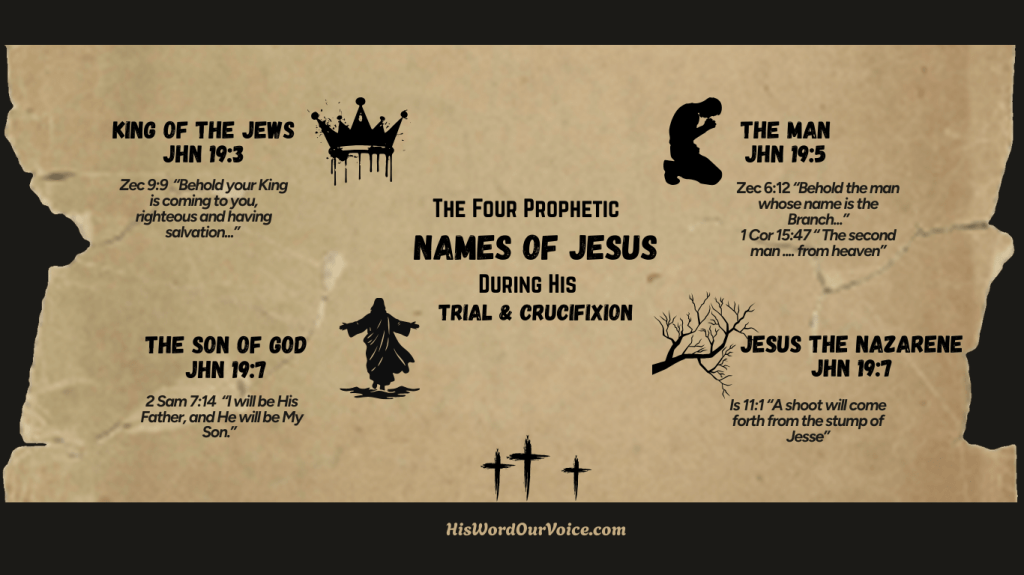
There are 4 Prophetic Names of Jesus declared by Pilate at the crucifixion. Pontius Pilate did more than authorize an execution.
He named Jesus with 4 very specific names and in doing so, the highest earthly authority in Judea publicly declared titles about Christ that are prophetic echoes from the Old Testament.
Pilate did not intend to proclaim truth. Yet Scripture shows that he did. And he represented the Voice of the Nations. Pilate was not merely a man in the story.
He represented:
– Rome
– Imperial authority
– The power of the Gentile world
So when Pilate speaks, it was not only a personal verdict — it is the voice of earthly rule. This aligns with the pattern of Psalm 2:
“The kings of the earth take their stand… against the Lord and against His Anointed.”
Yet even in opposition, the rulers of the earth become instruments in God’s plan.
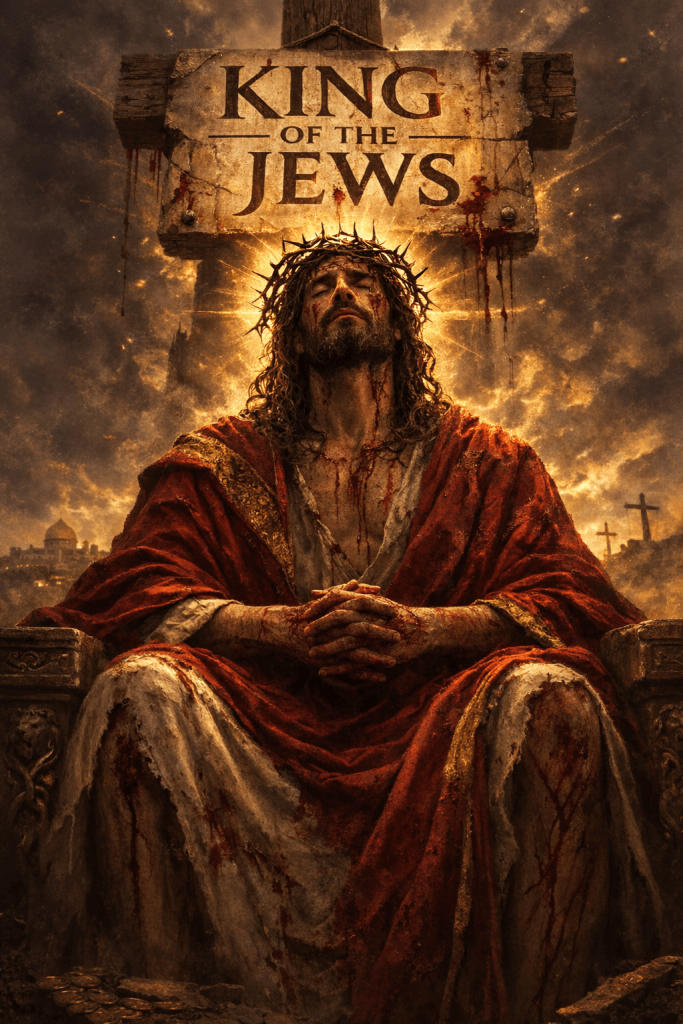
1. “King of the Jews”
Pilate’s official inscription reads:
“Jesus the Nazarene, the King of the Jews.” (John 19:19)
This was meant as a political charge. But it fulfills Messianic expectation:
“Behold, your King is coming to you…” (Zechariah 9:9)
And:
“I have installed My King on Zion…” (Psalm 2:6)
Pilate intended irony, but God established proclamation.
When pressured to change the wording, Pilate replied:
“What I have written, I have written.” (John 19:22)
and Rome sealed the title.
2. “Son of God”
When the religious leaders said:
“He claimed to be the Son of God.” (John 19:7)
Pilate became afraid.
Rome was familiar with divine-son language through emperor worship. This was no longer just a religious disagreement. It raised a deeper question:
Who stands before him?
Pilate does not deny the claim and he refuses to alter this remarkable kingship declaration. The Roman judge allows this declaration to stand and God proclaims His Son’s identity.
3. “Behold the Man”
Pilate presents Jesus to the crowd:
“Behold the Man!” (John 19:5)
He intends humiliation. Yet the phrase resonates with Daniel’s vision:
“One like a Son of Man…” (Daniel 7:13)
Pilate displays a beaten man and God reveals the representative Man. The One who stands in humanity’s place and takes on the sins of the world for the forgiveness of all.
4. “Jesus the Nazarene”
Pilate also identifies Him by origin:
“Jesus the Nazarene…” (John 19:19)
The root word for Nazarene is netzer, which means branch. And this aligns with Messianic expectation:
“And there shall come forth a rod out of the stem of Jesse, and a Branch (netzer) shall grow out of his roots:…” (Isaiah 11:1)
The Messianic promise of Isaiah 11 is fulfilled in Jesus the Nazarene!
These names were declared to the whole world. The inscription was written in:
– Hebrew
– Latin
– Greek (John 19:20)
This matters as it was declared in:
– The language of faith
– The language of empire
– The language of culture
And the message was particular to the Jewish people and universal to all nations.
The cross was not only an execution. It was a prophetic announcement.
The nations opposed the Messiah. Yet through their own authority they proclaimed Jesus:
The King
The Son
The Man
The Branch
 HisWordOurVoice
Leave a Reply